
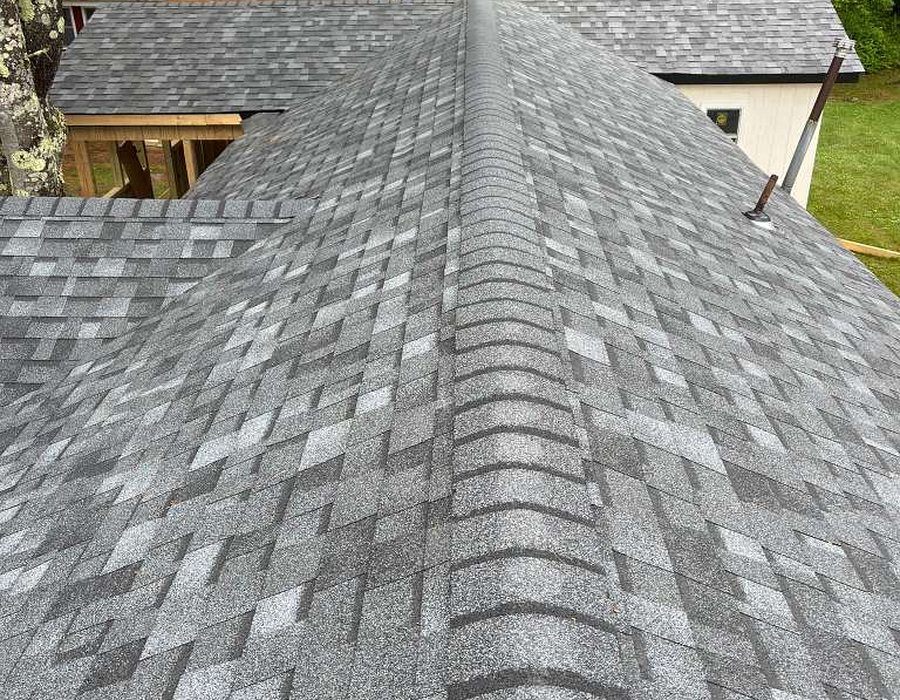
After a storm, the roof is only half the problem. The other half is proving what happened, to an adjuster who was not there. What you do in the first day decides how much of the repair you pay for.
Hour one: make it safe, not perfect
Stay off the roof. If there is water coming in, move what you can, put a container under it, and — if a ceiling is bulging — poke a small hole at the low point to let it drain in one place instead of bringing the whole plaster down. If there are downed wires anywhere near the house, or you smell gas, that is a utility call, not a roofing call.
Hour two: photograph everything, before anyone touches it
This is the step people skip and regret. Your claim is a documentation exercise. Take, from the ground:
- Wide shots of every elevation of the house, so the adjuster can orient themselves.
- Close shots of the damage — missing shingles, a lifted ridge, a bent gutter, granules washed into the driveway.
- The debris itself. The branch on the lawn, the shingle in the flower bed.
- Every interior stain, with something in the frame for scale.
- A shot showing the date, or just rely on the file timestamps — do not edit the photos.
Keep the damaged materials. A bagged handful of blown-off shingles has settled more than one disagreement about age and condition.
Hours three to twenty-four: tarp it, then call the insurer
Most policies require you to take reasonable steps to prevent further damage — and they will pay for that emergency work. That means a properly fastened tarp over the opening, not a sheet of plastic weighed down with bricks. Keep the receipt. We do emergency tarping across Orange County and we photograph the roof as we go, which gives you a second, dated record.
Then open the claim. Give them the facts — date, time, what you saw — and let the photographs do the arguing.
Storm damage and water coming in? Call 845-682-9536 for emergency tarping.
Three things worth knowing about the claim
1. Get your own written scope
An adjuster writes a scope of work. So should your contractor — itemized, in writing, so the two documents can be compared line by line. Where they differ, somebody has to justify the difference. That conversation goes much better with a document than with a memory.
2. Do not sign anything that assigns your claim away
After a big storm, crews turn up offering to “handle the insurance for you” in exchange for signing over the benefits of your policy. You do not have to do that to get work done, and you give up control of your own claim when you do.
3. Matching matters
If half a slope is replaced and the shingle has been discontinued, you are going to be looking at two colors for the next twenty years. Raise matching early, in writing, while the scope is still being negotiated.
What we do
We tarp, we photograph, we write an itemized estimate, and we deal with the adjuster on the technical questions — pitch, layers, decking condition, what the code requires when a roof is opened up. We do not take over your claim and we do not ask you to sign your policy benefits across.
Leave a Reply